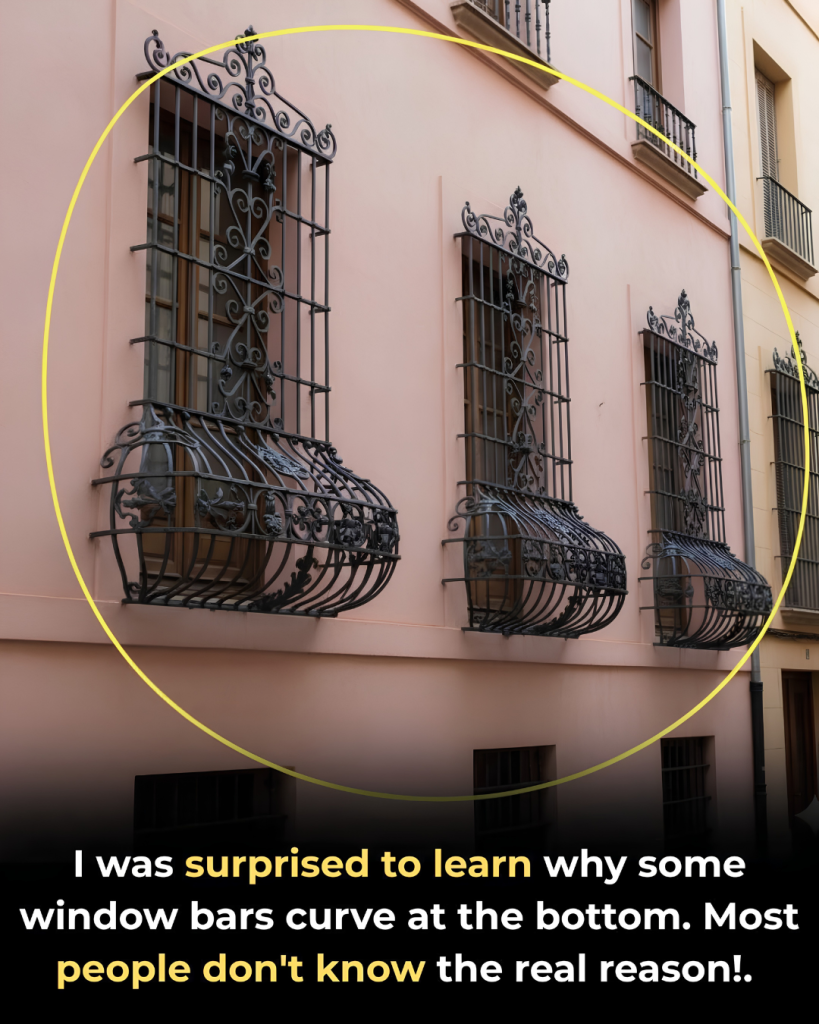

Window bars are sometimes curved at the bottom for a mix of practical, architectural, and visual reasons—not just decoration.
One common reason is extra interior space. A straight vertical bar sits flush with the window frame, but a curved “bulge” at the bottom creates a small ledge. That gives you a bit more room for things like flower boxes, small plants, or just less restriction on the window opening visually.
Another reason is security with usability. In many designs, the curved lower section still prevents someone from easily climbing or pushing through, but it can allow the upper part of the window to be opened wider without the bars feeling as intrusive. It’s a compromise between safety and ventilation.
There’s also a structural advantage in some cases. A curve can help distribute stress more evenly than a sharp angle, depending on how the bars are anchored, which can make them slightly more resistant to force at weak points.
But honestly, a big part of it is aesthetic tradition. Curved bars (sometimes called “bent” or “bowed” grilles) are often used to make buildings look softer and more decorative, especially on older European-style buildings or homes trying to avoid a prison-like appearance. The curve breaks up the harsh straight lines of metal bars and makes the facade feel more intentional and less utilitarian.
So in short: they’re curved to balance security, usability, and appearance, with aesthetics often being the deciding factor.